
The hardware peripherals market is ever-evolving, with the quick development of the technological environment and the requirements of the contemporary workplace. With wireless devices, AI-enabled devices, etc., businesses are now depending on smarter, faster, and more efficient peripherals to remain competitive.
Hardware peripherals are now playing a crucial role in organizations as they move towards hybrid work models and digital transformation strategies. The devices are no longer perceived as auxiliary but as a tool that directly influences productivity, automation, collaboration, and security. Be it a smart web camera to conduct virtual meetings or a high-speed storage that can support data-intensive operations, the appropriate peripherals can make operations much more productive.
This guide will focus on the most recent trends in hardware peripherals in 2026 and how companies can use them to become successful in the long run.
What Are Hardware Peripherals?
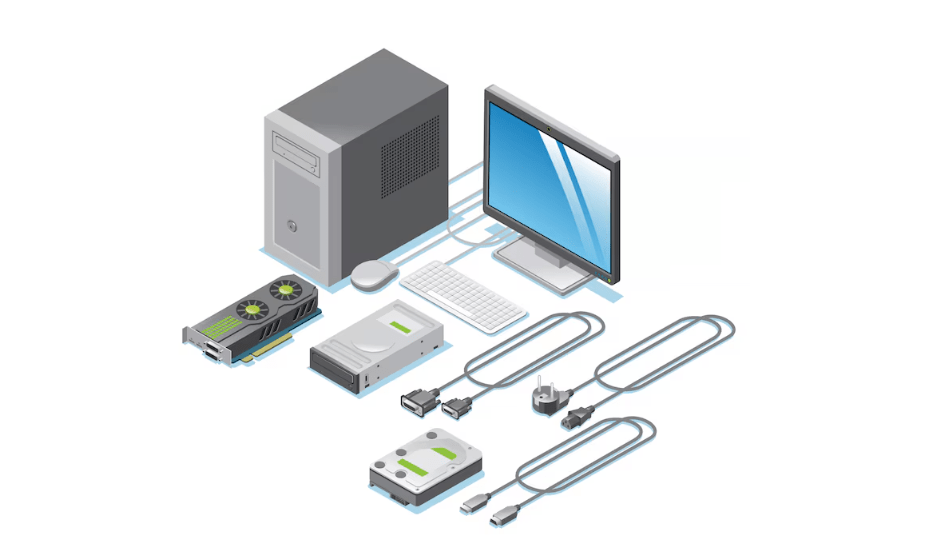
Hardware peripherals refer to the external devices that are attached to a computer system to add more functionality to the computer. These are broadly classified into four – the input, output, storage and communication devices.
Some of the input devices are keyboards, mice, and scanners that enable the user to interact with systems. Output devices like printers, monitors and speakers show processed information. Storage mediums, such as external hard drives and SSDs, are used to store and move data and communication mediums, such as webcams and network and security solutions tools, are used to connect and collaborate.
Typical examples of hardware peripherals are keyboards, mouse, printers, scanners, webcams and external drives. Companies tend to employ a mix of these machines to establish an entire and effective IT ecosystem.
Why Hardware Peripherals Matter for Businesses in 2026
The world today is digital-first, and businesses are highly relying on a solid IT infrastructure. Hardware peripherals are crucial in facilitation of day to day operations.
As hybrid and remote workplaces become increasingly popular, employees require high-quality gadgets that will enable them to work in any place. Wireless keyboards, noise-cancelling headsets, and high quality webcams are some of the peripherals that have become a critical collaboration tool.
The quality of peripherals is also directly related to efficiency and productivity. Quick devices minimize the time spent on downtime and allow employees to work more effectively and quickly. Moreover, with the rise in cybersecurity threats, secure peripherals, with sophisticated authentication, are gaining importance.
Top Hardware Peripheral Trends in 2026
Wireless & Cable-Free Workspaces
A change to wireless and cable-free installations is one of the most evident trends. Wired peripherals are being substituted with Bluetooth and Wi-Fi-enabled devices that have more flexibility and mobility.
Cleaner desk arrangements not only boost aesthetics, but also productivity through lessening of clutter. Devices can be easily linked in various systems without tangled cables by the employees.
AI-Powered Smart Peripherals
Hardware peripherals are being turned into intelligent, adaptable devices through artificial intelligence. Webcams with AI also have the ability to automatically adjust lighting and framing when making video calls, and voice-enabled devices can be operated without your hands.
These smart peripherals enhance user experience as they automate routine tasks and optimize performance according to user behavior.
Ergonomic & Health-Focused Devices
The well-being of the employees has become a priority, and as a result, the demand for ergonomic peripherals has been on the rise. Ergonomic keyboards, standing mice, and adjustable stands will assist in reducing strain and avoiding work-related injuries.
Since long-term health is now a priority of businesses when it comes to employees, there is no longer a choice as to whether to invest in ergonomic solutions or not.
Cloud-Connected Peripherals
Another big trend that will determine hardware peripherals in 2026 is cloud integration. Printers and other devices that are cloud-enabled can be used to print, scan, and handle tasks remotely.
All these peripherals work smoothly with SaaS tools, which allow real-time work and enhance the efficiency of workflow in the context of distributed teams.
High-Speed & High-Performance Devices
In the contemporary business world, speed and performance matter a lot. SSD storage devices with high speeds and high-speed data transfer technology are becoming the norm.
The implementation of USB-C and Thunderbolt connections have enhanced the connection and data transfer rate dramatically, and it is not as difficult to work with large files and complex software.
Advanced Security Features
Businesses are a primary concern when it comes to security and hardware peripherals are changing to suit these needs. There is an increase in the use of biometric systems like fingerprint scanners and facial recognition systems.
Such secure access peripherals are used to safeguard sensitive information as well as to make sure only authorized users can access sensitive systems.
Eco-Friendly & Sustainable Hardware
The concept of sustainability is impacting buying behavior in industries. Companies are shifting towards using energy-saving peripherals that are recyclable.
Green technology is not only less harmful to the environment, but also makes sense with corporate social responsibility objectives, which is why green technology is a good long-term investment.
Types of Hardware Peripherals Businesses Should Invest In
To construct a well-developed IT infrastructure, companies need to invest in a range of hardware peripherals:
- Input devices – Keyboards, mouse, scanners, and touch devices to interact with the user.
- Output devices – Printer, monitors, and audio devices to display information.
- Storage devices – Data management storage tools include external hard disks, SSDs, and data backup.
- Networking devices – Switching devices, modems, and devices to connect smoothly.
The selection of the appropriate mix will be based on the needs and size of the business.
How to Choose the Right Hardware Peripherals for Your Business
The choice of the hardware peripherals is important.
- Companies should consider their size and business needs.
- Small and medium enterprises can be interested in cost-effective solutions, whereas bigger enterprises can be concerned with performance and scalability.
- Devices need to be compatible with the existing hardware and software to prevent hiccups.
- Other major factors include budget, although one should not compromise on cost, quality, and performance. Making investments in good peripherals can be a good way to save in the long term.
- Scalability is also to be taken into consideration. With businesses expanding, their IT infrastructure must be capable of being expanded without necessarily having to be completely overhauled.
Common Mistakes Businesses Make When Choosing Peripherals
A lot of avoidable errors occur in the process of picking hardware peripherals by many businesses. The first one is disregarding compatibility, which may cause ineffectiveness and extra expenditures.
When device quality is selected to save money, breakdowns and decreased productivity are frequent. Ignorance of security features can put businesses at risk of data breaches and cyber threats.
The other mistake is not planning for future growth. Making investments in scalable solutions means that the businesses are able to adjust to the needs that change without causing much disruption.
Benefits of Upgrading to Modern Hardware Peripherals
There are a number of benefits associated with upgrading to the new hardware peripherals.
- First, it enhances productivity by facilitating quicker and more proficient processes. The workers will be able to accomplish tasks more easily and efficiently.
- Second, contemporary peripherals offer a higher quality user experience, enhanced design, functionality, and reliability.
- Third, they decrease downtime due to the minimization of technical problems and requirements.
- Lastly, the initial outlay can be more, but in many cases, the bulk of modern peripherals can result in long-run cost savings due to increased efficiency and longevity.
Future of Hardware Peripherals in India
Hardware peripherals have a bright future in India, as more people are moving towards AI and IoT. Conveniently, smart offices that have connected devices are becoming a normal occurrence, allowing automation and information-based decision-making to be made easily.
The need to adopt digital transformation by businesses will only increase the demand for sophisticated peripherals. The workplaces that will be based on automation will be highly dependent on intelligent devices to automate the workflow and increase productivity.
FAQs
- What are hardware peripherals?
Hardware peripherals are external devices that are attached to a computer to enhance its functionality, including input, output, storage, and communication devices.
- Which peripherals are essential for businesses?
The peripherals, such as keyboards, mouse, printers, monitors, storage devices, and networking equipment, are essential.
- Are wireless peripherals better than wired?
Wireless peripherals are more flexible and cleaner configurations, whereas wired devices can offer more reliable connections. The decision is based on particular requirements.
- How often should hardware peripherals be upgraded?
The majority of businesses must look to upgrade after 3-5 years (based on performance needs and technological changes).
- What are the latest trends in hardware peripherals?
Wireless devices, artificial intelligence (AI)-enabled peripherals, ergonomic design, cloud connectivity, high-speed performance, high-security, and eco-friendly solutions are among the key trends.
Conclusion
Hardware peripherals are not supporting tools anymore – they are a vital part of business infrastructure nowadays. Recent trends in 2026 emphasize the growing importance of innovation, efficiency, and security, as well as AI-driven devices and sustainable solutions.
Properly invested hardware peripherals can help businesses to achieve a high level of productivity, end users’ experience, and long-term cost savings.
In need of trustworthy hardware peripherals for your business? Get solutions and assistance – visit MBM NewTech today!